

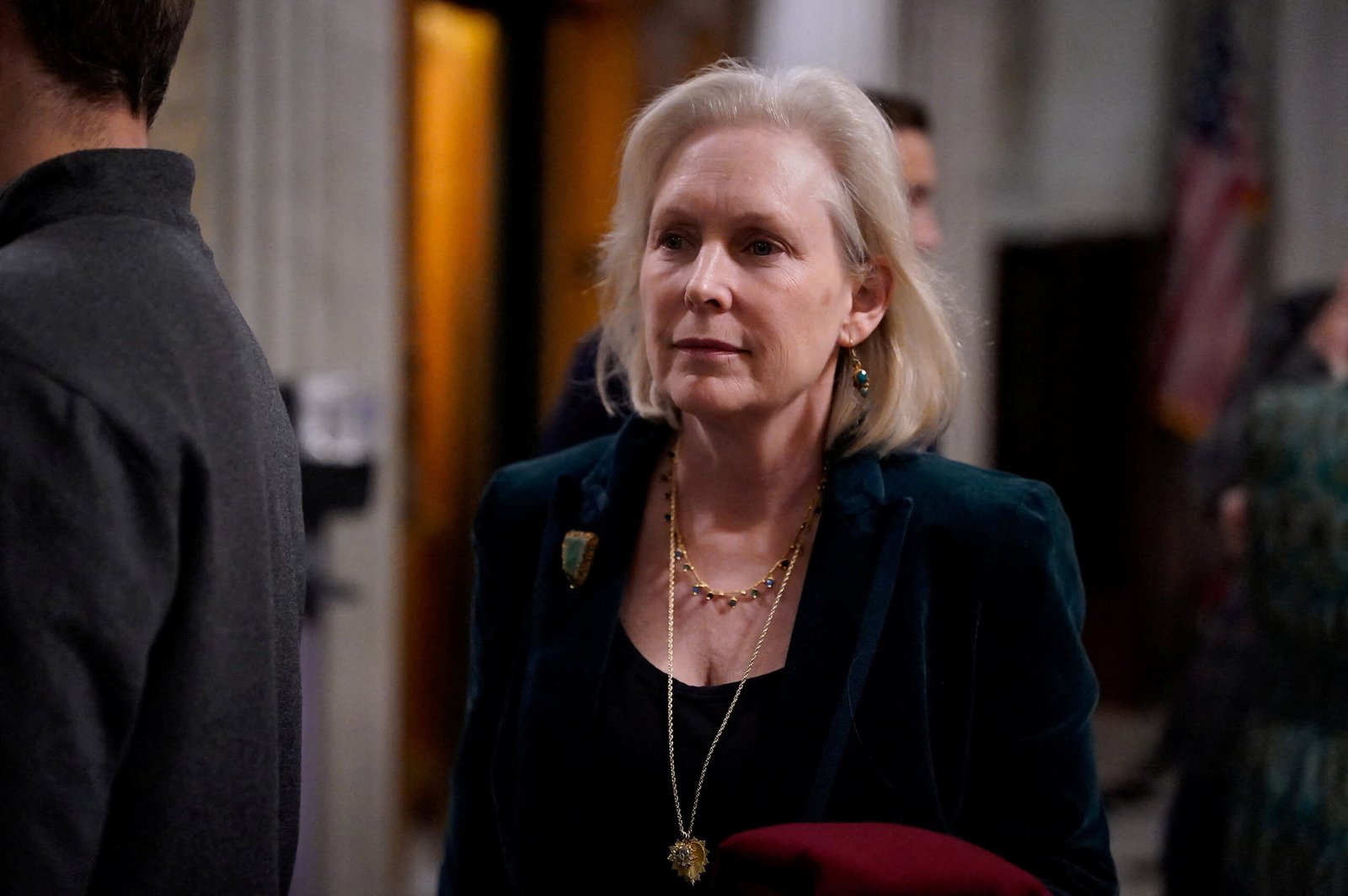
Kirsten Gillibrand Remains Optimistic Senate Agriculture Panel Will Advance Crypto Legislation Despite Ongoing Differences, even as unresolved policy disputes continue to slow bipartisan consensus in Washington.
Sen. Kirsten Gillibrand (D-N.Y.) says she remains confident that the Senate Agriculture Committee’s revised cryptocurrency legislation will move forward, despite the fact that Democrats and Republicans have not yet fully aligned. Speaking in an exclusive interview with CNBC, Gillibrand described the momentum behind the bill as strong, pointing to months of bipartisan negotiations already underway.
“Senators have been working intensely on a bipartisan basis for about six months now, and we currently have two separate bills in play,” Gillibrand explained.
Two Committees, One Market Structure Challenge
According to Gillibrand, crypto regulation has taken a dual-track approach in the Senate. One bill sits with the Agriculture Committee, which oversees the Commodity Futures Trading Commission (CFTC), while the other is being handled by the Banking Committee, responsible for the Securities and Exchange Commission (SEC) and broader banking oversight.
Because digital assets often share characteristics of both commodities and securities, Gillibrand said oversight from both committees is essential. While she is not a member of the Agriculture Committee, she has played an active role in negotiations related to crypto market structure.
She emphasized that lawmakers on both committees are negotiating in good faith, working simultaneously to address different aspects of the same rapidly evolving industry.
Agriculture Committee Moves Ahead Despite Policy Disagreements
On Wednesday night, the Senate Agriculture Committee released updated legislative text that builds upon an earlier bipartisan discussion draft. The bill would significantly expand the CFTC’s authority to regulate digital assets.
Committee Chairman John Boozman (R-Ark.) acknowledged that key policy disagreements remain but described the bill as the result of months of collaboration and stakeholder feedback.
“Although it’s unfortunate that we couldn’t reach a final agreement, this legislation reflects extensive bipartisan work,” Boozman said, adding that it’s time to move the bill forward.
A markup session for the Agriculture Committee’s crypto legislation is scheduled for Jan. 27. Gillibrand said she believes the markup will proceed as planned, even though some issues still require bipartisan compromise.
She also expressed hope that senators would revisit earlier compromises that were included in prior drafts but removed from the latest version. “Some of those compromises were very strong,” she noted, adding that reintroducing them could help strengthen the bill.
Banking Committee Bill Faces Delays and Industry Pushback
Meanwhile, progress on the Senate Banking Committee’s crypto market structure bill has slowed. A markup hearing originally scheduled for Jan. 15 was postponed at the last minute following opposition from parts of the crypto industry, including Coinbase.
Sen. Tim Scott (R-S.C.), chairman of the Banking Committee, said negotiations are ongoing. He confirmed that lawmakers from both parties, along with industry leaders, remain engaged and committed to reaching a workable solution. A new hearing date has not yet been announced.
Gillibrand said discussions are expected to continue in the coming weeks, noting that there is strong pressure from multiple sides to finalize legislation sooner rather than later.
Coinbase Raises Red Flags Over Banking Committee Draft
The delay intensified after Coinbase CEO Brian Armstrong publicly criticized the Banking Committee’s draft while speaking at the World Economic Forum in Davos. Armstrong said Coinbase’s legal and executive teams identified “serious issues” in the proposed text and felt compelled to speak out.
In a post on X, Armstrong warned that the draft bill would be “materially worse than the current status quo.” He also highlighted provisions that would restrict stablecoin rewards and potentially allow banks to stifle competition.
One controversial section would prohibit stablecoin issuers from offering rewards simply for holding tokens, instead limiting rewards to transactions or formal programs.

Stablecoin Debate and the GENIUS Act
Banks have argued that allowing stablecoin rewards could create a loophole in the GENIUS Act, legislation that bars stablecoin issuers from paying direct interest. They claim such rewards could encourage deposit flight from insured banks.
Gillibrand, who served as the lead Democratic sponsor of the GENIUS Act, said she remains confident that lawmakers can resolve these concerns through bipartisan language. The bill was signed into law by President Donald Trump in July.
“We were fine with rewards and points programs, but not interest-like products on stablecoins,” Gillibrand said. “If the language needs refining, we’ll keep working on it.”
She stressed that lawmakers wanted to give the crypto industry a fair opportunity to operate within clear rules, while also ensuring consumers understand that stablecoins are not FDIC-insured like traditional bank deposits.
A Key Republican Ally Steps Aside
Gillibrand’s long-time bipartisan partner on crypto issues, Sen. Cynthia Lummis (R-Wyo.), announced in December that she will retire at the end of her term. Lummis chairs the Senate Banking Committee’s crypto subcommittee and played a key role in advancing both the GENIUS Act and earlier crypto frameworks.
“It’s a huge loss to the Senate and a personal loss to me,” Gillibrand said, while emphasizing that her commitment to digital asset legislation remains unchanged.
Why Gillibrand Says Regulation Is Non-Negotiable
Gillibrand has championed crypto regulation since 2022, arguing that clear rules are essential for innovation, consumer protection, and global competitiveness. She warned that without a strong regulatory framework, the U.S. risks falling behind regions like Asia and China.
“If we want to protect consumers and traditional financial institutions, regulation is the answer,” she said. “It’s what allows us to compete globally.”
Despite ongoing disagreements, Gillibrand urged lawmakers to stay at the table and continue bipartisan negotiations. In her view, advancing comprehensive crypto regulation is not just possible—it’s necessary.