

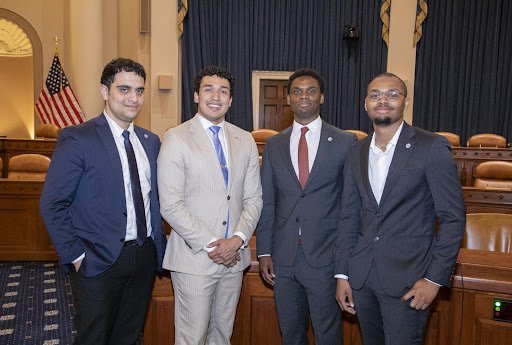
When Skye Blanks and his partners opened Premo Cannabis in Keyport, New Jersey in 2023, they faced a choice familiar to entrepreneurs entering regulated industries: prioritize rapid expansion and maximum profit extraction, or build deep community roots that might limit short-term growth but create sustainable long-term value. They chose community, and within a year ranked among New Jersey’s top independent dispensaries: demonstrating that community-centered business models can compete effectively even in highly competitive markets.
This outcome contradicts conventional entrepreneurial wisdom that treats community engagement as corporate social responsibility; something businesses do with excess profits rather than as core strategy. Blanks’ approach across his multiple ventures suggests a different framework: entrepreneurship as economic development, where business success and community prosperity are interdependent rather than competing objectives.
The philosophy emerges from Blanks’ work bridging global small business development and local entrepreneurship. As Chief Operations Officer at the International Council for Small Business (ICSB), he directs programs serving micro, small, and medium-sized enterprises worldwide. This international perspective reveals patterns in how businesses either extract value from communities or create sustainable economic ecosystems that benefit all stakeholders.
Extractive entrepreneurship treats communities as resources to exploit—sources of cheap labor, customer bases to monetize, regulatory environments to navigate. Community-centered entrepreneurship recognizes that business sustainability depends on community health. Companies cannot thrive long-term in communities experiencing economic decline, social fragmentation, or institutional decay. The most successful businesses invest in the ecosystems they inhabit.
At Premo Cannabis, this philosophy manifests in hiring practices that actively recruit individuals impacted by the war on drugs, creating economic pathways for community members who faced barriers to traditional employment. Rather than viewing this as charity, Blanks frames it as strategic talent acquisition: these employees bring valuable community knowledge, customer service skills, and authentic connection to the demographics the business serves.
The approach extends to how Premo engages with Keyport itself. Rather than operating as a retail outpost disconnected from local culture, the dispensary positions itself as a community gathering space—a “movement,” as Blanks describes it, not just a store. This requires physical design choices, such as housing the operation in a restored historic building with museum-quality lighting and boutique aesthetics, that signal respect for local heritage while elevating the industry’s image.
It also requires operational choices that prioritize community benefit alongside profitability. This might mean sourcing products from local suppliers when possible, sponsoring community events, or implementing customer service protocols that treat every interaction as relationship-building rather than transactional exchange. These choices create costs that pure profit maximization would avoid, but they generate community loyalty that provides competitive advantages generic competitors cannot easily replicate.
This community-centered model reflects lessons from Blanks’ international development work. Through the ICSB’s Knowledge Hubs program, he has observed how businesses in resource-constrained environments often succeed by maximizing community relationships rather than just financial capital. In markets where access to traditional funding is limited, entrepreneurs build businesses through community support, reciprocal relationships, and deep local knowledge.
These lessons translate surprisingly well to U.S. contexts, where small businesses increasingly compete against national chains and e-commerce giants with superior capital and economies of scale. Community-centered businesses cannot win on price or selection alone. They compete by offering something large competitors cannot: authentic local connection, personalized service informed by community knowledge, and business models that reinvest profits in local ecosystems.
Blanks’ consulting work through Herman Todd Consulting Group applies this framework to help businesses identify how community engagement creates competitive advantage in their specific contexts. For a neighborhood restaurant, this might mean sourcing from local farmers and becoming a gathering space for community organizations. For a professional services firm, it could involve pro bono work for local nonprofits that builds reputation while addressing community needs. For a retail operation, it might mean employing local residents and adapting inventory to community preferences.
The critical insight is that community-centered entrepreneurship is not about sacrificing profits for social impact. It is about recognizing that sustainable profitability in many contexts depends on community health. Businesses operating in declining communities face challenges that erode profitability: reduced customer purchasing power, deteriorating infrastructure, difficulty attracting quality employees, and increased security costs. Conversely, businesses that contribute to community vitality create conditions for their own success.
This interdependence becomes even more apparent in regulated industries like cannabis, where public perception and political support directly impact business viability. Dispensaries that operate purely as profit-extraction mechanisms risk generating community opposition that can influence licensing decisions, zoning regulations, and local ordinances. Those that demonstrate genuine community benefit build political capital that provides business resilience.
Blanks’ work with the ICSB’s Knowledge Hubs extends this community-centered philosophy to global scales. The program does not just transfer business knowledge across borders; it builds networks of entrepreneurs who support each other’s success. This peer learning model recognizes that sustainable entrepreneurship requires ecosystem development, not just individual business building.
Through Knowledge Hubs, entrepreneurs in different countries share not just strategies but resources: supplier networks, market intelligence, technical expertise, and emotional support. This creates international communities of practice where business success becomes collective rather than purely individual. Entrepreneurs stop seeing peers as competitors and start viewing them as collaborators in building healthier business ecosystems.
The same principle applies to Blanks’ educational work through Yale’s Tsai Center for Innovative Thinking and the Hispanic Scholarship Fund. Rather than just preparing individual students for entrepreneurial success, he focuses on building cohorts of emerging business leaders who will support each other throughout their careers. This network-building approach recognizes that entrepreneurial success rarely happens in isolation; it emerges from communities of practitioners sharing knowledge, resources, and encouragement.
For entrepreneurs building businesses today, this community-centered framework offers both philosophical guidance and practical strategy. Philosophically, it reframes entrepreneurship from individual wealth creation to community economic development. Businesses exist not to extract maximum value from communities, but to create sustainable economic ecosystems that benefit all participants.
Practically, this translates to specific operational choices: hiring from the local community rather than importing talent; sourcing from local suppliers when quality and price are comparable; participating in community organizations and events; adapting business models to address community needs; and measuring success not just by profit margins but by community impact.
These choices require longer-term thinking than pure profit maximization demands. Community relationship building generates returns over years, not quarters. Local hiring may require more training investment than recruiting experienced employees from elsewhere. Community engagement consumes time founders could spend on immediate business growth.
But businesses built on community foundations demonstrate resilience that purely transactional operations lack. When economic downturns hit, community-centered businesses enjoy customer loyalty that helps weather storms. When competition intensifies, authentic local connection provides differentiation. When challenges arise, community relationships generate support that isolated businesses cannot access.
Blanks’ career across international development, small business consulting, and cannabis entrepreneurship demonstrates that community-centered business models work across diverse contexts. Whether operating in New Jersey or working with entrepreneurs worldwide through the ICSB, the principle remains constant: businesses that invest in community health create conditions for their own sustainability.
This represents a fundamental shift from extractive capitalism toward regenerative entrepreneurship; business models that replenish the resources they consume, strengthen the communities they operate in, and create value for all stakeholders rather than just owners and investors. It is not charity or corporate social responsibility. It is strategic business building that recognizes interdependence between enterprise success and ecosystem health.
As entrepreneurship becomes increasingly central to economic development strategies globally, this community-centered approach offers a framework for creating businesses that generate broad prosperity rather than concentrated wealth. Skye Blanks’ work demonstrates what that looks like in practice: businesses that compete successfully while building the communities that sustain them.