

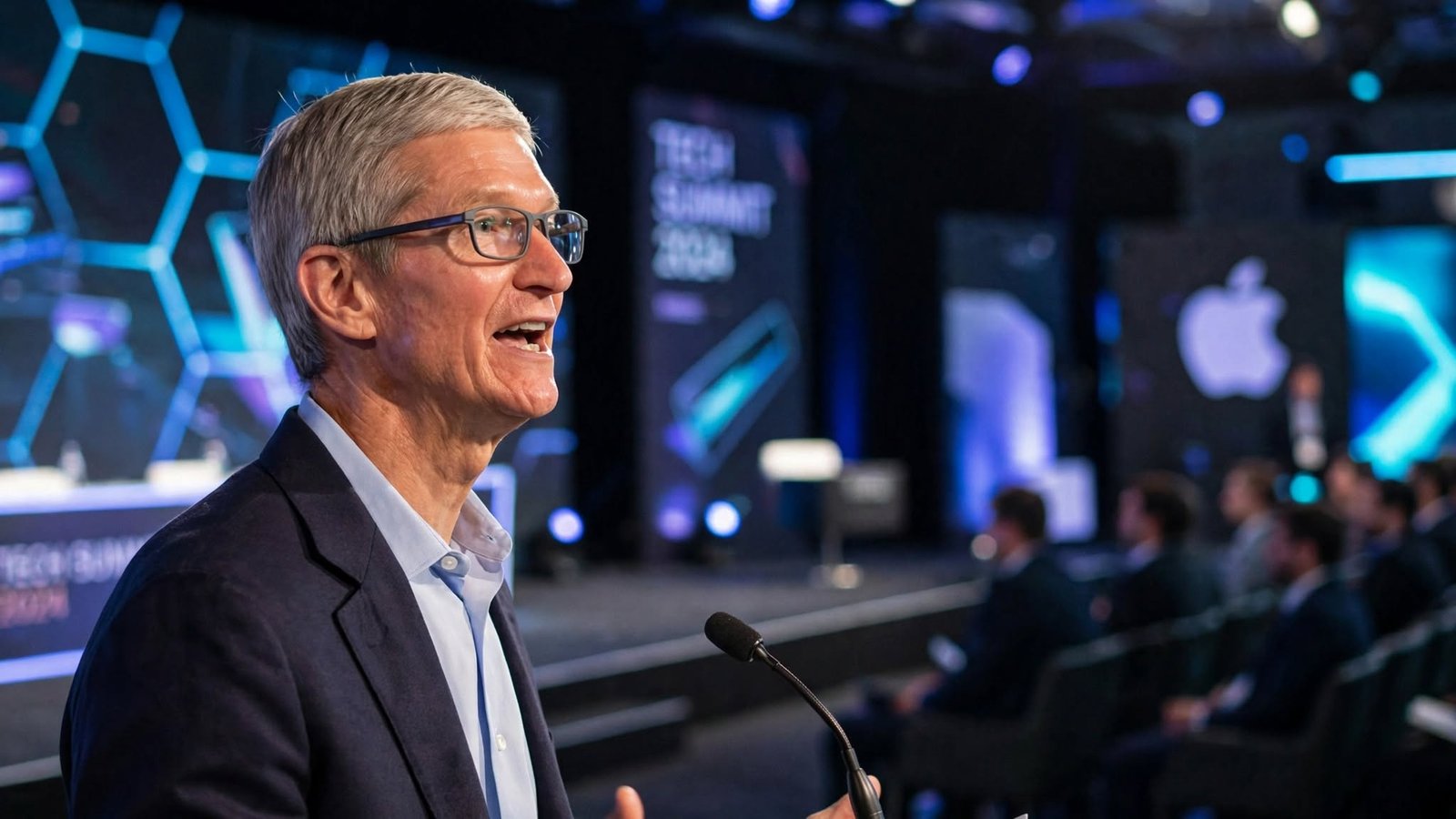
End of an Era at Apple: Tim Cook Steps Down as CEO After 15 Years
End of an Era at Apple as Tim Cook concludes his 15-year tenure as the technology giant’s chief executive and passes the leadership reins to John Ternus.
Cook’s departure marks one of the most significant leadership transitions in Apple’s modern history. Since taking over as CEO, he has overseen Apple’s transformation into one of the world’s most valuable companies while navigating major changes in technology, consumer behaviour and the global economy.
End of an Era at Apple
The End of an Era at Apple brings to a close Tim Cook’s long tenure at the top of the world’s most valuable technology companies.
Cook became Apple’s CEO in 2011, succeeding the company’s co-founder Steve Jobs. His leadership period included the expansion of Apple’s product ecosystem, the growth of its services business and the company’s increasing focus on areas such as artificial intelligence, privacy and custom silicon.
His tenure also coincided with Apple’s extraordinary increase in market value.
Tim Cook’s 15-Year Leadership
Tim Cook’s leadership of Apple has lasted approximately 15 years, making him one of the longest-serving CEOs in the company’s history.
Unlike Jobs, who was closely associated with breakthrough consumer products and Apple’s design philosophy, Cook became known for operational efficiency, supply-chain management and expanding Apple’s global business.
Under his leadership, Apple continued to release new generations of the iPhone, iPad, Mac, Apple Watch and AirPods while expanding services such as Apple Music, Apple TV+ and iCloud.
Apple Surpasses $4 Trillion Valuation
One of the defining milestones of Cook’s tenure was Apple’s rise to a valuation exceeding $4 trillion.
The achievement highlighted the extraordinary scale of Apple’s business and its importance to global financial markets.
Apple’s growth has been supported by its massive installed customer base, premium hardware strategy, expanding services ecosystem and ability to generate substantial cash flow.
The company became one of the clearest examples of how a technology brand can develop a highly integrated ecosystem around hardware, software and services.
John Ternus Takes the Reins
With Cook’s departure, John Ternus becomes the next leader of Apple.
Ternus is a veteran Apple executive who has played an important role in the company’s hardware development.
His experience within Apple’s product organisation gives him extensive knowledge of the company’s engineering culture and product-development process.
His appointment also provides continuity at a company where product innovation remains central to its identity.
Who Is John Ternus?
John Ternus has spent years working at Apple and has held senior responsibilities within its hardware organisation.
He has been involved in major product-development efforts and has become one of the company’s most prominent engineering leaders.
His background is particularly relevant as Apple works to develop its next generation of hardware and technology platforms.
As CEO, Ternus will inherit a company operating at enormous global scale.
A Different Chapter for Apple
The leadership transition represents more than a change in Apple’s CEO.
It begins a new chapter for a company that has undergone substantial changes since Cook succeeded Jobs.
Apple now operates across smartphones, computers, wearables, digital services and other technology categories.
The company is also investing heavily in artificial intelligence as competition intensifies across the technology industry.
Apple’s AI Challenge
One of the major challenges facing the new leadership will be Apple’s position in artificial intelligence.
Companies across Silicon Valley are rapidly developing generative AI systems and AI-powered products.
Apple has been working to integrate AI into its devices and software while maintaining its focus on privacy and user experience.
Ternus will therefore take charge at a time when AI is reshaping the technology sector.
The Importance of the iPhone
Despite Apple’s expanding product portfolio, the iPhone remains a central part of its business.
The smartphone continues to serve as the foundation of Apple’s ecosystem and drives demand for related products and services.
Future iPhone innovation will remain critical as smartphone markets mature and competition from global manufacturers continues.
The new CEO will be expected to maintain the strength of Apple’s flagship product while preparing the company for future technological shifts.
Apple’s Services Business
During Cook’s tenure, Apple significantly expanded its services operations.
Services such as Apple Music, Apple TV+, Apple Arcade, iCloud and other subscription offerings have become an increasingly important source of recurring revenue.
This diversification has reduced Apple’s dependence on individual hardware-product cycles.
The continued expansion of services will likely remain an important part of Apple’s long-term strategy.
Custom Silicon and Mac Growth
Another important development during Cook’s leadership was Apple’s transition toward its own computer processors.
The company’s move away from Intel processors and toward Apple-designed silicon gave it greater control over hardware and software integration.
The transition helped Apple differentiate its Mac products through performance and energy efficiency.
The company’s custom-chip strategy could also play an important role in future AI and computing products.
Apple’s Global Influence
Apple’s influence extends far beyond the technology industry.
The company’s products have become deeply integrated into everyday life for millions of consumers.
Apple’s decisions can influence suppliers, developers, retailers and other technology companies around the world.
The leadership transition will therefore be closely watched by investors and the broader technology industry.
What Ternus Inherits
John Ternus takes over an Apple that is financially powerful but also facing significant strategic challenges.
He inherits a global customer base, a highly valuable brand and an extensive ecosystem of products and services.
At the same time, Apple must navigate AI competition, regulatory scrutiny, changing consumer demand and the need to develop its next major product categories.
Balancing continuity with innovation will be one of his biggest challenges.
Investor Focus
Investors will be watching closely to determine whether Apple’s new leadership can maintain the company’s growth trajectory.
Key areas of interest will include iPhone sales, services growth, margins, artificial intelligence, new products and Apple’s capital-allocation strategy.
The transition could also influence how investors view Apple’s long-term innovation pipeline.
Tim Cook’s Legacy
Tim Cook leaves behind a major legacy at Apple.
He successfully guided the company through a period of enormous growth and helped transform it into a technology and financial powerhouse.
His leadership style differed significantly from Steve Jobs, but Cook demonstrated that Apple could continue growing after the departure of its iconic co-founder.
The company’s journey from Cook’s appointment to a valuation above $4 trillion represents one of the most remarkable corporate growth stories of the modern technology era.
End of an Era at Apple: Key Takeaway
End of an Era at Apple as Tim Cook concludes his 15-year tenure as CEO and hands leadership of the company to John Ternus.
Cook’s time at the helm was defined by enormous financial growth, expansion of Apple’s services ecosystem, the development of custom silicon and continued success across major product categories.
Apple’s rise beyond a $4 trillion valuation represents a major milestone associated with his leadership.
Ternus now begins a new chapter at the technology giant, inheriting a powerful global brand while facing major challenges surrounding artificial intelligence, innovation and the future of consumer technology.
The transition will be closely watched as Apple enters its next phase under new leadership.
Frequently Asked Questions (FAQs)
1. Who was Apple’s CEO before John Ternus?
Tim Cook served as Apple’s CEO before John Ternus took over the leadership role.
2. How long was Tim Cook Apple’s CEO?
Tim Cook served as Apple’s CEO for approximately 15 years, having taken over the position in 2011.
3. Who is John Ternus?
John Ternus is a longtime Apple executive and hardware engineering leader who has held senior positions within the company.
4. What happened to Apple during Tim Cook’s tenure?
Apple experienced enormous financial growth, expanded its services business and developed new product categories while increasing its global market value.
5. Did Apple surpass a $4 trillion valuation?
Yes, Apple surpassed the $4 trillion valuation milestone during Cook’s leadership.
6. What are Apple’s biggest challenges under John Ternus?
Artificial intelligence, product innovation, regulatory pressure, global competition and maintaining long-term growth are among the key challenges.
7. Why is John Ternus’s background important?
Ternus has extensive experience in Apple’s hardware organisation and has been involved in the development of major Apple products.
8. What is Tim Cook’s biggest legacy?
Cook’s major legacy includes guiding Apple through extraordinary financial growth while expanding its hardware, software and services ecosystem.
9. What role does AI play in Apple’s future?
AI is expected to be a major strategic area as Apple works to integrate increasingly advanced AI capabilities across its products and software.
10. Why is the CEO transition significant?
The transition marks a major change in Apple’s leadership after 15 years under Cook and could shape the company’s next phase of innovation and growth.