

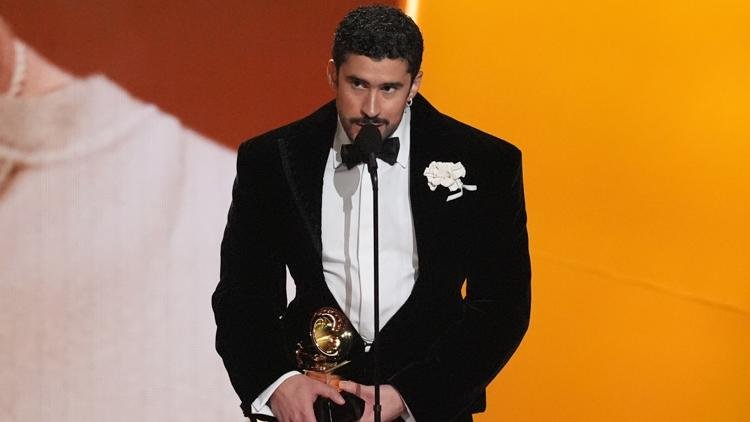
Global music superstar Bad Bunny made headlines not only for his groundbreaking achievements at the Grammy Awards but also for his bold political stance. In what many are describing as Bad Bunny delivers an anti-ICE message during Grammy Award win, the Puerto Rican artist used his acceptance speech to spotlight immigration concerns and advocate for unity and compassion.
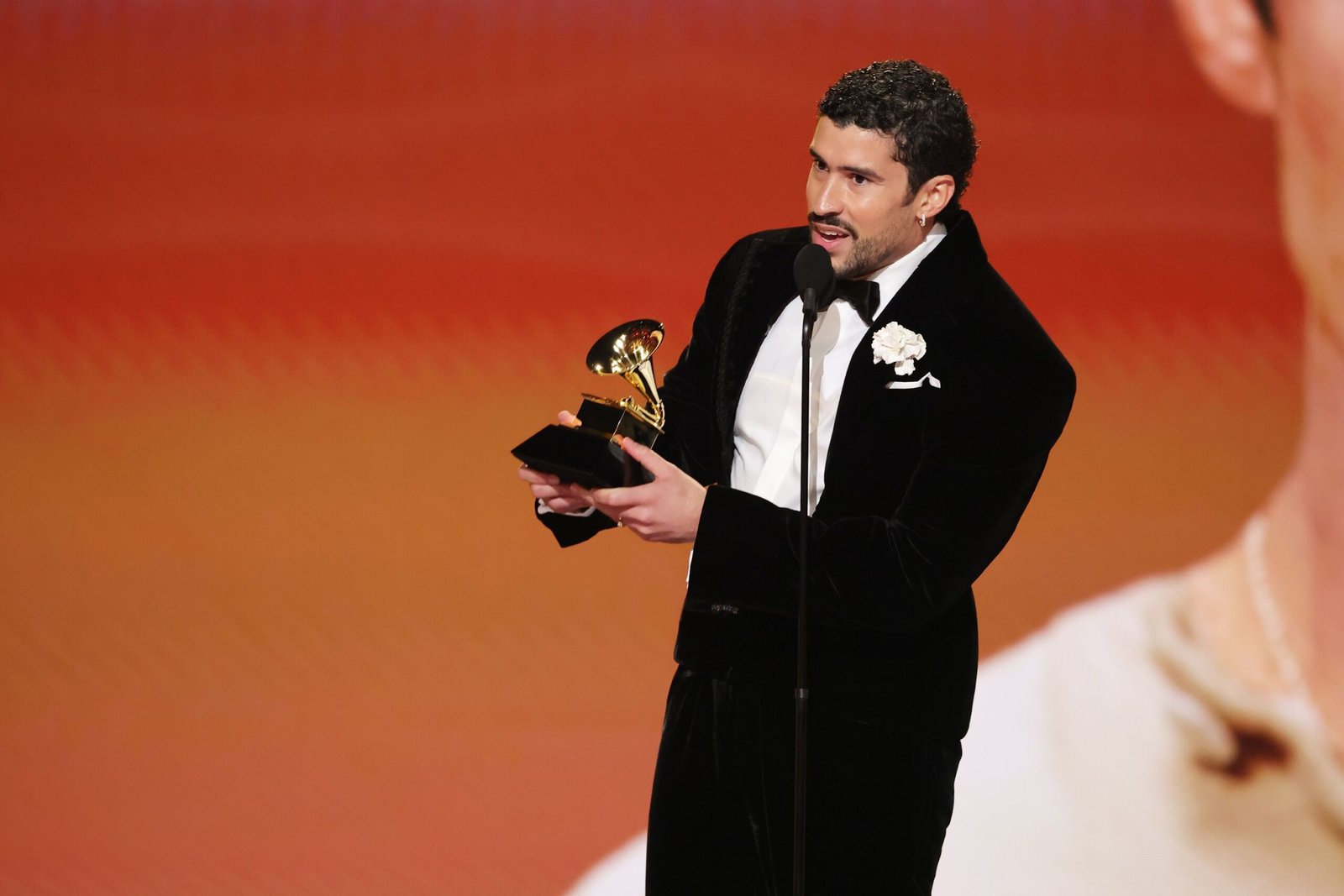
Just a week before he is scheduled to headline the Super Bowl LX halftime show, Bad Bunny took center stage during one of music’s most prestigious nights. While accepting the Grammy for Best Música Urbana Album, he opened his speech with a powerful and unexpected remark, declaring, “Before I thank God, I’m going to say: ICE out!” The statement was met with loud applause and enthusiastic cheers from the audience at the Los Angeles ceremony.
Calling for Humanity and Compassion
During his speech, the artist addressed immigration rhetoric and prejudice, emphasizing the importance of recognizing shared humanity. He passionately told the crowd that immigrants should not be viewed as criminals or outsiders, but as people striving to achieve their dreams. Bad Bunny reflected on the growing negativity in society, suggesting that hate only fuels more division. He encouraged audiences to respond differently, saying that love remains the strongest force capable of overcoming hostility.
The phrase “ICE out,” which has been used by activists protesting strict immigration enforcement, underscored the seriousness of his message and reinforced the theme of social justice in his remarks.
A Historic Night for Latin Music
Bad Bunny’s appearance at the ceremony was historic for more than his political speech. The singer secured three major Grammy wins, including Album of the Year for Debí Tirar Más Fotos (I Should Have Taken More Photos). The victory marked a milestone, as it became the first Spanish-language album to win the Recording Academy’s highest honor.
Delivering much of his speech in Spanish, Bad Bunny dedicated his award to individuals who have left their homelands in pursuit of better opportunities. His emotional tribute resonated with immigrant communities and highlighted the cultural significance of his success.
Artists Using the Spotlight for Activism
Bad Bunny was not the only artist to address political and social issues during the ceremony. Several performers used their time on stage to speak about immigration and related concerns.
Billie Eilish voiced her criticism of immigration enforcement while accepting Song of the Year for “Wildflower.” She highlighted the struggles many immigrants face and encouraged audiences to continue advocating for change. Portions of her speech were censored during the broadcast, though online footage later revealed her strong and unfiltered stance.
British singer Olivia Dean also shared a heartfelt message while accepting the Best New Artist award. She proudly spoke about her immigrant family background, acknowledging the courage and sacrifices made by previous generations and emphasizing the importance of cultural diversity.
Meanwhile, host Trevor Noah addressed political tensions through humor. During his opening monologue, he joked about various political figures and cultural moments, offering a lighter perspective on current events. He also shared a humorous exchange with Bad Bunny, discussing Puerto Rico’s relationship with the United States, which prompted laughter and applause from the audience.
Rising Controversy Ahead of the Super Bowl
As Bad Bunny delivers an anti-ICE message during Grammy Award win, his comments have intensified debates surrounding his upcoming Super Bowl halftime performance. The artist has already faced criticism from some conservative groups, partly due to his decision to exclude mainland United States locations from his recent concert tour. He previously explained that he made this choice out of concern that immigration enforcement operations could potentially disrupt his shows.
Additionally, critics have targeted his Spanish-language music catalogue, while some conservative organizations have announced plans to produce alternative programming during the Super Bowl halftime show. The performers involved in that counter-event have yet to be officially announced.
Music as a Platform for Social Dialogue
Bad Bunny’s Grammy appearance demonstrated how major entertainment platforms can serve as stages for cultural and political expression. His speech blended celebration with advocacy, reflecting the evolving role of artists in shaping public conversations. Whether praised or criticized, his message has sparked discussions across the entertainment world and beyond, highlighting the intersection between music, identity, and social justice.
As anticipation builds for his Super Bowl performance, one thing remains clear—Bad Bunny continues to influence not only global music trends but also broader conversations about equality, identity, and human dignity.